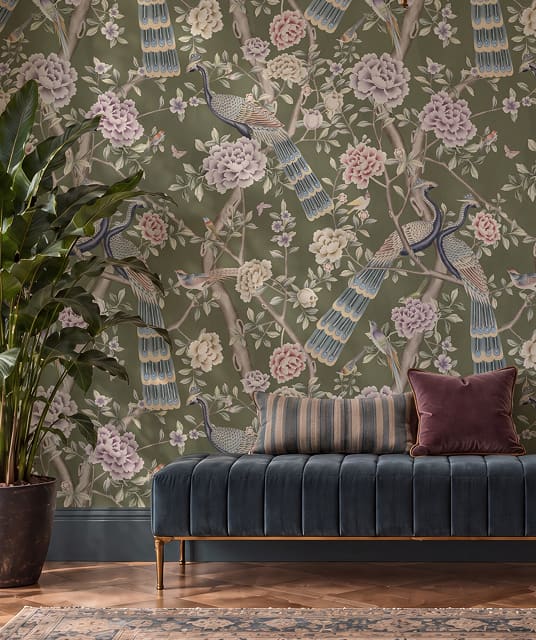
Grasscloth Wallpaper
Installation & Care Instructions
Grasscloth is a natural wallcovering with visible texture, tonal variation and seams. Professional installation is recommended, using heavy-duty adhesive, the paste-the-paper method and a booking time of 3 to 5 minutes.
These instructions provide general guidance. Always follow the installation sheet supplied with your Milton & King product, as printed grasscloth and murals may have additional requirements.


Biodegradable

hand-assembled organics

(no polyvinyl chloride)

water-based inks
Grasscloth & Natural Wallpaper –
Considerations & Material Specifications
Anti-microbial features- Grasscloth wallcoverings contain bactericides and mildew inhibitors to discourage the growth of mold and mildew under normal conditions.
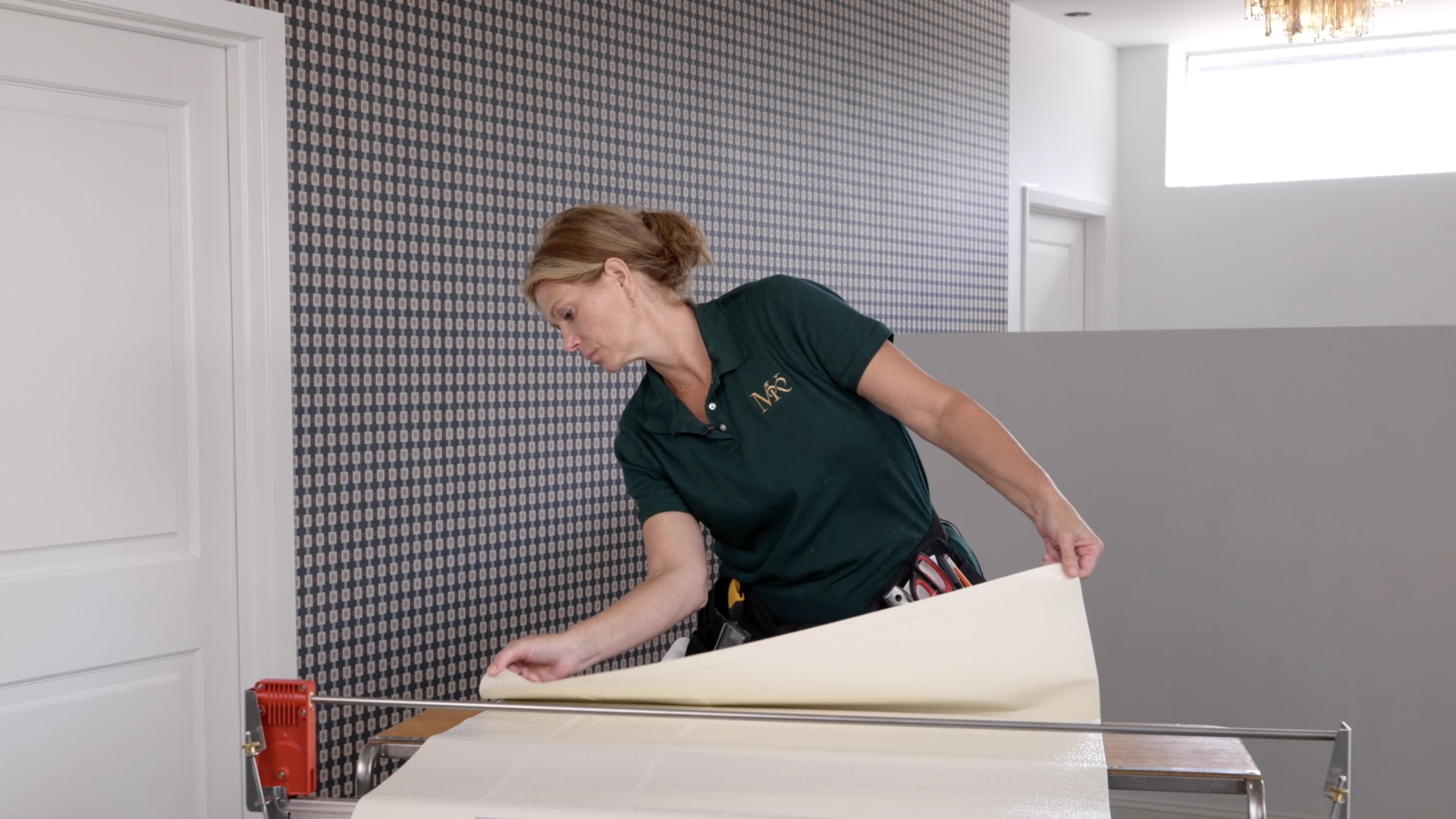
Paste-The-Paper – Made from natural fibres, these wallcoverings will expand when adhesive is applied. Simply apply the paste directly to the back of the paper—be generous, but avoid using excessive paste. Allow for booking time, as the wallcovering will expand slightly during this period before hanging.
Book the wallcovering – “Booking” is a process where you fold the pasted sides of the wallcovering together, adhesive-to-adhesive, with the pasted side facing inwards. This allows the paste to activate and helps prevent it from drying out before you hang the wallcovering. Leave the booked wallcovering a few minutes.
The wallcovering rolls are finished precisely to have no overlap. Meaning the panels simply butt up to each other for ease of installation.
Spongeable: Dirt, dust, and other marks can be cleaned with a slightly damp sponge (do not use any solvents).
Wet removal – is a common method for removing grasscloth & natural wallcovering. However, because grasscloth is made from natural materials, it can be delicate and requires a bit of extra care during the removal process to avoid damaging the walls
-
Finish
Matte -
Cleanability
Spongeable -
Usage
Domestic & Commercial -
Adhesive
Paste-The-Paper -
Removal
Wet Removal -
Lightfast Rating
Good Lightfastness
-
 Paste the paper
Paste the paper
Paste the paper -
 Wet removal
Wet removal
Wet removal -
 Spongeable
Spongeable
Spongeable -
 Domestic & commercial
Domestic & commercial
Domestic & commercial -
 Good lightfastness
Good lightfastness
Good lightfastness -
 Straight match
Straight match
Straight match
Grasscloth Wallpaper Installation Video
Watch the installation video before opening your rolls. It explains how to prepare the wall, paste and book each drop, protect the woven surface and form accurate butt seams without forcing the fibres.
Cleaning and Care of Grasscloth Wallpaper
Grasscloth is delicate and requires careful installation and handling. It cannot be cleaned with water and stains can be permanent. Clean with a gentle duster or using a vacuum with a soft brush attachment on a low power mode. Pets may be attracted to the natural fibers, organic aromas and texture. Visible paneling and color variations between drops are common due to how natural grasses absorb dyes and light — this is considered a desirable feature, not a flaw, by many designers.
Grasscloth Wallpaper Installation, Cleaning & Maintenance FAQS
Natural fibres can be susceptible to mould if moisture is allowed to penetrate behind or into the wallcovering. This is why we don’t recommend grasscloth in high-humidity rooms such as bathrooms or kitchens without adequate ventilation.
If you notice early signs of mould — discoloration, spotting, or a musty smell — do not attempt to clean with water or damp cloths as this will compound the problem. Address the source of moisture first. In mild cases, a dry brush along the surface may help. In more serious cases, the affected section will likely need to be replaced.
Prevention is straightforward: ensure the wall surface is fully dry and sealed before installation, keep the room well ventilated, and avoid hanging grasscloth in rooms where condensation is a regular occurrence.
Yes — this is completely normal. Grasscloth is made from natural plant fibres and has a mild earthy scent when first unrolled and during installation. The smell is more noticeable in the first few days after hanging and will dissipate naturally as the adhesive cures and the room airs out.
To speed up the process, ventilate the room well during and after installation — open windows where possible and allow air to circulate for 48 to 72 hours. The scent is not harmful and most people find it fades to undetectable within a week.
If you have allergies or have a sensitivity to grasses, grasscloth may not be suitable for your space. Ordering a sample first is a good way to assess the scent before committing to a full room installation.
Natural fibres are sensitive to prolonged UV exposure and grasscloth will fade over time in direct sunlight — this is true of all natural wallcoverings, not just ours. In rooms with large south-facing windows or significant direct sun through the day, you may notice lightening of the colour over several years.
To slow fading, UV-filtering window film or blinds make a meaningful difference. Rooms with indirect or diffused light are ideal for grasscloth and will preserve the colour significantly longer.
If you’re installing in a bright room, it’s also worth ordering a little extra wallpaper at the time of purchase. Dye lots change between print runs, so patching years later with a new roll may not be a perfect match.
Unlike our non-woven wallpapers which dry strip cleanly from the wall, natural fibre grasscloth requires a wet removal process. Because grasscloth sits on a paper backing rather than a non-woven backing, the face and backing can separate during removal, requiring a little more patience.
Follow these steps for the cleanest result:
- Lay down drop cloths to protect flooring and baseboards. Turn off any heating or air conditioning so the walls don’t dry too quickly during the process.
- Use a scoring tool to perforate the grasscloth surface, allowing the removal solution to penetrate behind it.
- Apply a gel remover solution to one panel at a time and leave for 15 minutes.
- Lift an edge from the bottom of the panel and peel upward.
- For any backing that remains on the wall, reapply the removal solution, wait a further 15 minutes, then peel or scrape off using a putty knife held at a low angle.
- Wash off any remaining paste residue with a sponge and warm water. Rinse the wall and allow it to dry completely before priming or repainting.
Priming your walls before the original installation will make this process significantly easier when the time comes.
Small tears in your printed grasscloth wallpaper are repairable! Wallpaper scraps can be used as a patch. Begin by removing any rough edges around the tear with a utility knife. Then cut a piece of wallpaper slightly bigger than the area you are trying to repair, make sure the pattern matches exactly, and cover the torn area with the patch. Use your knife to cut out a shape through the patch piece and the wallpaper underneath. The shape should be larger than the torn area. Now remove the underneath wallpaper that was cut out by your new shape. Apply paste to or activate the adhesive on the patch and fit it into the shape cut out of the wallpaper. Wipe away excess adhesive and smooth the wallpaper surface with a soft, clean, dry cloth.
Grasscloth wallcoverings are delicate products. Avoid using any water to clean. Even damp sponges can leave stains behind. Gentle dusting using a dry cloth or feather duster can be used or a vacuum on a low-powered setting. For printed grasscloths, special care is needed to not compromise the print on the wallcovering which can chip away if improperly cleaned. Stains, dirt, oil and odors may be impossible to remove. DO NOT RUB.
Grasscloth can be hung DIY, but it’s not a beginner project. We recommend a professional installer for first-time hangs.
The main challenges are width and cleanliness. The rolls are wide and difficult for one person to handle alone. More critically, grasscloth stains easily – any paste that squeezes out at the seams and touches the face of the paper can cause permanent marks. Use paste sparingly and work clean throughout.
A few rules to hang by:
- Never use abrasive tools – no rubbing or scrubbing the surface
- Keep paste off the face of the wallpaper at all costs
- Account for obstacles (windows, doors, pipework) before you start – each one adds complexity
- Our wallpapers use a butt-join seam, which makes alignment straightforward once you’re set up
If you want to test your confidence before committing to a full room, order a 1-yard sample and practice the paste and handling first. It’s the best way to understand how the material behaves before you’re standing on a ladder.
Grasscloth is a specialist wallcovering and not all wallpaper hangers have experience with natural fibers. When looking for an installer, it’s worth asking specifically whether they have hung grasscloth or natural wallcoverings before. The handling, paste technique, and seam management are different enough from standard wallpaper that prior experience matters.
A few ways to find the right person:
- Ask your interior designer. If you’re working with a designer, they will almost always have a trusted installer they use for specialist wallcoverings.
- Check trade associations. Wallcovering Installers Association (WIA) certifies professional hangers across the US and holds a directory you can search by state.
- Ask us. Our Wallpaper Trade Directory lists installers familiar with Milton & King wallcoverings. Search by location to find a professional in your area.
When you speak to a potential installer, ask to see previous grasscloth or natural wallcovering work if possible. The quality of seams and the cleanliness of the finish around obstacles like outlets and switches will tell you a lot.
Yes, we recommend you do. Inspect every roll to ensure it is in good condition with no faults present. In the unlikely event of a manufacturing error, it is much easier to resolve before installation than after.
Please note that shading and paneling are normal characteristics of natural, unprinted grasscloth. Seamless installs or perfectly consistent color across the entire wall should not be expected — this is a feature of the natural material, not a defect.
We cannot accept liability for defects that are apparent at the time of hanging, nor can we be responsible for any consequential loss. After hanging 2 or 3 lengths we strongly recommend you inspect the results again before continuing.
Sizing a wall refers to a diluted coat of paste you apply to the wall prior to wallpapering. It is typically recommended for untreated/unpainted porous plaster walls or drywall. Sizing creates a uniform surface for the grasscloth wallpaper to adhere providing for grip and slippage when installing. Be sure the sizing is evenly applied and fully dry before installing the wallpaper. Take care that there are no streaks that may dry as raised bumps that will show through the wallpaper. In most cases, like a painted wall, a primer will be enough to prepare your wall.
Primer acts as a protectant/sealer that prevents the paste from being absorbed into a unpainted wall and allows it to grip to slick surfaces. It is highly recommended that you prime a wall before hanging grasscloth wallpaper because it creates an even surface for the wallpaper to adhere to as well as makes the wallpaper removal process much easier should you ever decide to update the wallpaper.
Preparing a wall for grasscloth wallpaper is like laying good foundations for a beautiful home. It needs to be done methodically, and thoroughly. So find the perfectionist within you and follow these steps:
- You want the wall as clean as possible, so remove all traces of dirt, old wallpaper and flaking paint.
- With a suitable filler, even out cracks and irregularities to achieve a satisfyingly smooth surface.
- Once you’ve smoothed, filled, and sanded your wall, make sure all surfaces are clean and dry.
- Remove electrical coverings.
You’ll need:
- Wallpaper
- Wallpaper paste
- Measuring tape
- Scissors
- Drop cloth
- Soft bristled smoothing brush
- Straight edge
- Pencil
- Level or Plumb-bob
- Craft knife (with ample blades)
- Seam roller (if available)
Grasscloth wallcovering should be wet hung by applying the adhesive directly to the back of the grasscloth. We recommend ROMAN PRO-838 HEAVY DUTY, ROMAN 234 or ZINSSER SURE GRIP HEAVY DUTY tub adhesives at full strength – DO NOT DILUTE.
More installation guidance
Explore our complete library of wallpaper installation and care instructions.
VIEW ALL GUIDES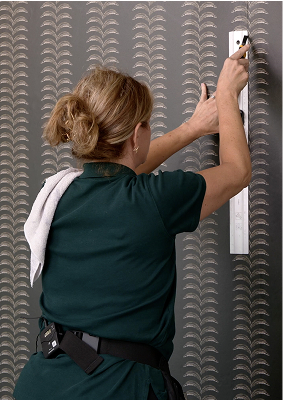
Find a professional installer
Connect with an experienced wallpaper installer and achieve the best finish for your grasscloth.
Trade Directory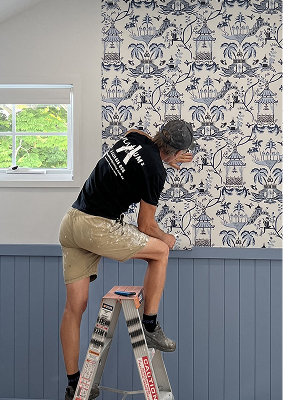
Need a little more help?
Our team can answer product, installation and care questions before your project begins.
Contact our team